


Just when you think allergy season is over and you have survived cedar and oak, fall rolls around and a different plant takes aim at your immune system. Ragweed is one of the most prolific pollen producers in North America. A single plant can release up to a billion pollen grains in a season, and the grains are so light they can travel 400 miles on the wind. In the Waco area, ragweed season starts in August and does not let up until November. If your worst allergy months are September and October, or if you notice that eating cantaloupe or watermelon makes your mouth itch during those months, ragweed is very likely the cause.
Key takeaways
- Ragweed produces massive quantities of lightweight pollen that travel hundreds of miles, making avoidance nearly impossible during the season
- Peak season in Central Texas is September through October, with pollen starting in August and persisting until the first hard frost (usually late November)
- Ragweed cross-reacts with melons, bananas, cucumber, zucchini, and chamomile tea through pollen food syndrome
Ragweed in Central Texas
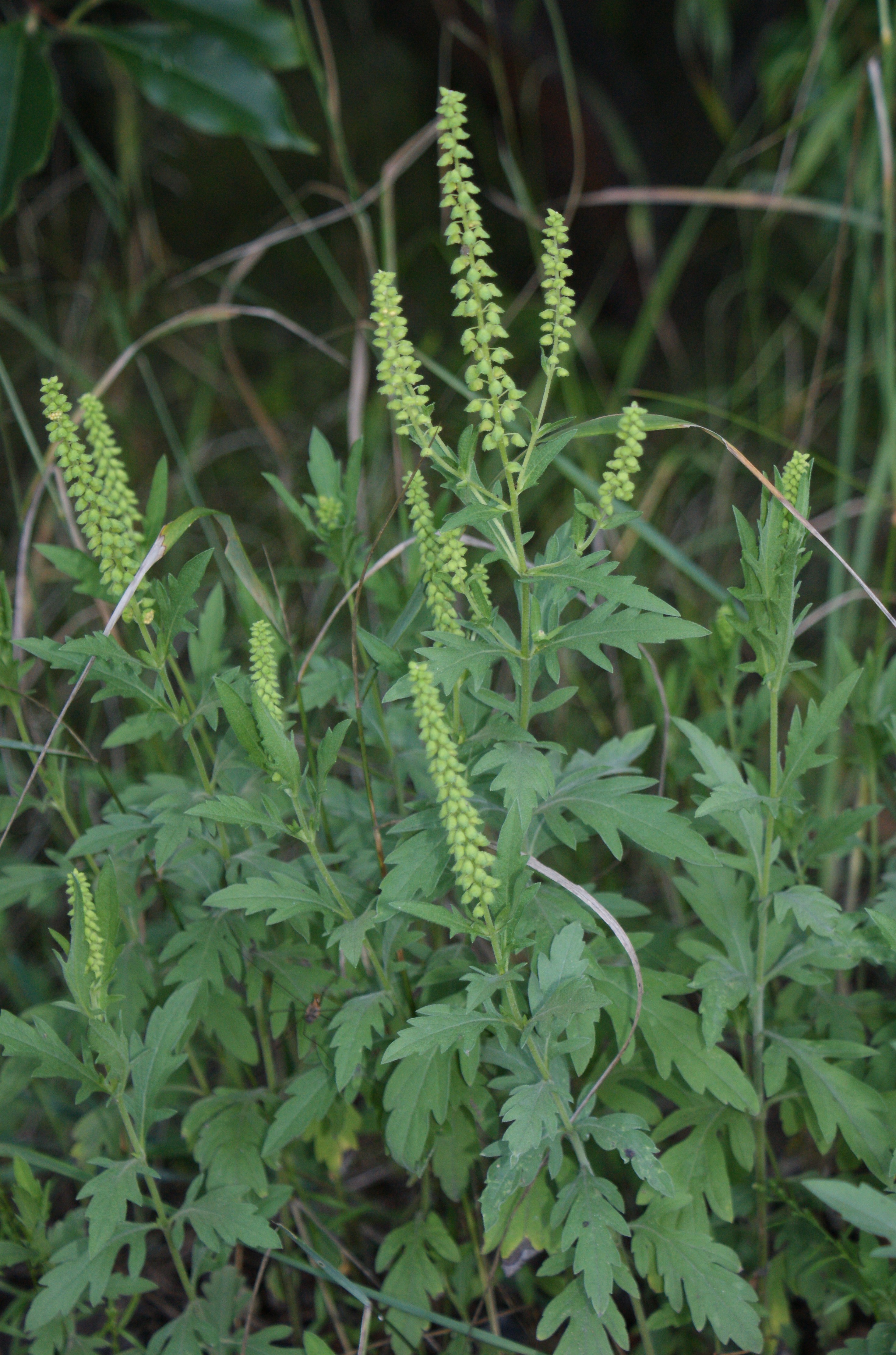
Several ragweed species grow in the Waco area. Giant ragweed (Ambrosia trifida) is a tall annual that can reach six to twelve feet in height and is found along riverbanks, in disturbed soil, and in agricultural margins. Common ragweed (Ambrosia artemisiifolia) is shorter but more widespread, growing in vacant lots, roadsides, construction sites, and anywhere soil has been disturbed. Western ragweed (Ambrosia psilostachya) is a perennial species present in prairies and grasslands throughout Central Texas. All three produce highly allergenic pollen.
Ragweed pollen grains are approximately 20 microns in diameter, small and lightweight enough to stay airborne for hours after release. Air sampling stations have detected ragweed pollen 400 miles from the nearest source plants. This means you cannot eliminate your ragweed exposure by eradicating plants from your yard or neighborhood. The pollen is regional, wind-distributed, and inescapable during the active season without staying indoors with sealed windows.
The first hard frost kills annual ragweed plants and ends pollen production for the season. In the Waco area, the first frost typically occurs in late November, though some years it arrives earlier (late October) and some years later (early December). Until that frost, pollen production continues at whatever level the surviving plants support.
Why ragweed counts vary year to year
Several factors influence how severe any given ragweed season will be. Late spring and summer rainfall affects plant growth: wetter conditions produce larger, more vigorous ragweed plants that generate more pollen. Temperature patterns influence the timing of pollination onset and the duration of the season. Wind patterns on any given day determine how much pollen reaches your location from sources miles away.
Research has also shown that rising atmospheric CO2 levels increase ragweed pollen production per plant. Laboratory studies found that doubling CO2 concentration nearly doubled the amount of pollen produced by ragweed plants. This is one of the reasons some scientists believe ragweed seasons are getting longer and more intense over the past several decades, though the relationship between climate change and pollen is complex and involves temperature, rainfall, and growing season length as well.
Symptoms and their patterns
Ragweed allergy symptoms are typical of allergic rhinitis: sneezing (often in intense fits), nasal congestion, clear watery runny nose, itchy eyes, itchy nose and palate, post-nasal drip, and fatigue. The eye symptoms and sneezing tend to be particularly intense with ragweed compared to some other pollens. Many patients describe ragweed season as producing a more "aggressive" symptom profile than oak or grass, with rapid-onset sneezing attacks that can hit within minutes of stepping outdoors on a high-count day.
The season is long enough to significantly affect quality of life. From August through November, outdoor activities, sports, gardening, fall festivals, and even walking the dog can trigger symptom flares. Morning hours tend to be worst because ragweed pollen release peaks in the early to mid-morning. High pollen counts combined with the Texas fall wind (cold front days with sustained gusty winds from the north) can create severe exposure events that overwhelm even medicated patients.
Fatigue during ragweed season is common and often underappreciated. The sustained immune activation from three to four months of continuous allergen exposure produces inflammatory cytokines that cause tiredness, difficulty concentrating, and reduced productivity. Combined with poor sleep from nighttime nasal congestion, the cumulative fatigue by October can be substantial. Patients attribute it to the end-of-year work push or seasonal mood changes when allergies are actually the primary driver.
Ragweed and food cross-reactions
Ragweed pollen food syndrome affects a meaningful percentage of ragweed-allergic patients. The proteins that cross-react are primarily profilins, which are shared between ragweed pollen and certain foods. The most common cross-reactive foods are melons (watermelon, cantaloupe, honeydew), bananas, zucchini, cucumber, and chamomile tea.
The melon connection is the most frequently noticed. Eating cantaloupe or watermelon during September and October can trigger mouth tingling, lip itching, and throat scratchiness that does not occur when eating the same fruit in April. The seasonal pattern is a strong clue: food reactions that track with ragweed pollen season and disappear when pollen is absent confirm the pollen food syndrome diagnosis. Cooking the food eliminates the reaction in most cases because the profilin proteins are heat-sensitive.
The chamomile tea reaction surprises some patients. Chamomile belongs to the same plant family (Asteraceae) as ragweed, and the proteins are similar enough to cross-react. A patient who drinks chamomile tea for relaxation during fall allergy season and develops throat itching is experiencing ragweed pollen food syndrome. Switching to a non-Asteraceae herbal tea resolves the issue.
Testing
Ragweed is included in the standard Central Texas allergy skin prick testing panel. A positive test confirms IgE-mediated sensitization. Blood tests for ragweed-specific IgE are an alternative. Because ragweed season overlaps with other fall allergens (cedar elm pollen, fall mold spores from decaying leaves), testing is important for distinguishing ragweed from other contributors to fall symptoms. Without testing, patients may assume all their fall symptoms are ragweed when mold or cedar elm is also playing a role.
Treatment
Medications
Start nasal corticosteroid sprays in late July, one to two weeks before ragweed counts typically begin climbing in August. Daily non-sedating antihistamines during the season reduce sneezing and itching. Antihistamine eye drops address eye symptoms, which are often especially bothersome during ragweed season. Azelastine nasal spray can be added for patients who need more than a steroid spray alone.
For patients who have already been on nasal steroids for grass season (May through August), continuing without interruption into ragweed season (August through November) avoids the gap in coverage that allows nasal inflammation to return. Many Central Texas patients benefit from continuous nasal steroid use from spring through fall to cover the sequential grass-ragweed transition.
Environmental measures
Keep windows closed during ragweed season. Run the car AC on recirculate. Avoid outdoor activities during peak morning hours when pollen counts are highest. Shower and change clothes after extended outdoor time, particularly on windy days when pollen dispersal is greatest. Nasal saline rinses after outdoor exposure physically remove pollen from the nasal passages. HEPA air purifiers in the bedroom reduce overnight pollen exposure. Checking daily ragweed pollen counts at allergywaco.com helps you plan around the worst days.
Immunotherapy
For patients who suffer through ragweed season every year despite medications, immunotherapy is the most effective long-term solution. Ragweed is included in multi-allergen treatment formulations along with other relevant allergens. Over three to five years, the immune system's reactivity to ragweed decreases. Both allergy shots (85-90% efficacy) and drops (75-85% efficacy) are options. Ragweed sublingual tablets (Ragwitek) are an FDA-approved sublingual option specifically for ragweed allergy, taken daily at home during the months leading up to and through ragweed season. Patients typically notice improvement within their first ragweed season on treatment, with progressive benefit over subsequent seasons.
Year-round allergy management perspective
Ragweed season is one piece of Central Texas's overlapping allergy calendar. Many patients who are ragweed-allergic are also sensitized to cedar, oak, grass, dust mites, and mold. Managing each season individually is exhausting and often inadequate. Immunotherapy that covers all relevant allergens simultaneously is the most efficient approach to managing the full year. If you are spending three to four months in spring and three to four months in fall fighting allergy symptoms, that is more than half the year. Addressing the underlying sensitivities changes the math and gives you your year back.
Testing for ragweed allergy
Ragweed is included in the standard Central Texas allergy skin prick testing panel. A positive reaction confirms IgE-mediated sensitization to ragweed pollen proteins. The test is performed alongside other fall allergens (cedar elm, mold species) and the full regional panel (cedar, oak, grass, dust mites, pet dander, cockroach) to build a complete picture of your allergen profile.
Distinguishing ragweed from other fall allergens matters because the treatment timing and environmental recommendations differ slightly. Cedar elm pollination overlaps with ragweed but cedar elm is a tree pollen (treated with tree pollen immunotherapy components), while ragweed is a weed pollen. Fall mold counts (Alternaria, Cladosporium) also peak during the same months as ragweed from decaying leaf matter. Without testing, you may assume your fall symptoms are entirely ragweed when mold and cedar elm are contributing too. Knowing all three are involved changes the immunotherapy formulation and the environmental recommendations (ragweed avoidance focuses on pollen counts and morning timing; mold avoidance focuses on damp environments and leaf raking; cedar elm requires tree pollen-aware timing for medication).
Blood tests for ragweed-specific IgE are an alternative when skin testing cannot be performed. Component-resolved diagnostics for specific ragweed proteins can help distinguish ragweed-specific sensitization from cross-reactivity with other weed pollens, though in clinical practice this distinction rarely changes the treatment approach.
Treatment approaches
Medication timing: start before the season
The most effective medication strategy for ragweed allergy begins before pollen counts climb. We recommend starting nasal corticosteroid sprays in late July, approximately two weeks before ragweed pollen typically appears in the Waco area in August. This timing allows the anti-inflammatory effect to build in the nasal tissue so that when ragweed counts start rising, the nasal lining is already pre-protected. Patients who start medications reactively, after symptoms have already developed, spend weeks catching up and never achieve the same level of control as those who started preventively.
Daily non-sedating antihistamines (cetirizine, fexofenadine, loratadine) during the season provide relief from sneezing, itching, and runny nose. Antihistamine eye drops (ketotifen, olopatadine) address the eye symptoms that ragweed commonly produces. The combination of nasal steroid, oral antihistamine, and eye drops covers the three primary symptom domains and is adequate for many patients with moderate ragweed allergy.
For patients transitioning from grass season (May through August) into ragweed season (August through November), continuing nasal steroids without interruption across both seasons maintains continuous coverage during the eight-month combined warm-season pollen period. Stopping nasal steroids in August when grass wanes and restarting them when ragweed symptoms hit allows a gap where nasal inflammation returns, making the ragweed onset worse than it would have been with continuous treatment.
Prescription escalation
When over-the-counter medications are insufficient, prescription options include azelastine nasal spray (an antihistamine that works locally in the nose and acts faster than oral antihistamines for nasal symptoms), combination sprays (azelastine plus fluticasone), and leukotriene modifiers (montelukast). For acute severe episodes, particularly during the peak weeks of September and October when counts can be extreme on windy days, short courses of oral corticosteroids provide rapid relief while maintaining the baseline treatment regimen.
Environmental measures
Ragweed pollen avoidance follows the same principles as other pollen allergies. Keep windows closed during the season. Run car AC on recirculate. Check daily ragweed pollen counts at allergywaco.com before planning outdoor activities. Pollen counts are typically highest in the morning (5 AM to 10 AM), so shifting outdoor activities to afternoon or evening reduces exposure. Shower and change clothes after extended outdoor time. Nasal saline irrigation after outdoor exposure washes pollen from the nasal passages.
One ragweed-specific tip: ragweed plants grow in disturbed soil, which means they are common along roadsides, in vacant lots, on construction sites, and in your own yard if you have bare or poorly maintained soil patches. Keeping your lawn maintained and eliminating bare soil patches around your property reduces the ragweed population in your immediate environment. This will not eliminate your exposure (pollen travels from miles away), but it reduces the highest-concentration source right outside your door.
Immunotherapy
For patients whose ragweed allergy significantly impacts their fall quality of life despite medications, immunotherapy provides the most durable long-term solution. Ragweed pollen is included in multi-allergen treatment formulations alongside other relevant allergens. Allergy shots gradually desensitize the immune system over three to five years, with success rates around 85 to 90 percent for pollen immunotherapy. Allergy drops are an alternative with efficacy at 75 to 85 percent.
Ragweed sublingual tablets (Ragwitek) are an FDA-approved sublingual immunotherapy specifically for ragweed allergy. The tablet is placed under the tongue daily and dissolves within seconds. Treatment is started 12 weeks before the expected ragweed season and continued through the season. Clinical trials showed significant reduction in ragweed allergy symptoms and rescue medication use. Ragwitek is an appealing option for patients whose primary problem is ragweed and who prefer home-based daily treatment over clinic visits for shots.
Immunotherapy benefits build progressively. Patients typically notice some improvement during their first ragweed season on treatment, with greater improvement in the second and third seasons. After completing three to five years of treatment, most patients maintain the benefit for years, meaning you do not commit to lifelong treatment. For patients who have been miserable every fall for years, the prospect of durably reduced ragweed sensitivity is often what motivates them to start treatment.
The year-round allergy management perspective
Ragweed season is one piece of Central Texas's overlapping allergy calendar. Cedar in winter, oak and elm in spring, grass in summer, ragweed and mold in fall, dust mites year-round. A patient allergic to all of these has maybe one or two months per year (late November through mid-December, between the first frost ending ragweed and cedar starting in earnest) when the allergen load is low. That is not much of a break.
Managing each season individually with separate medication start and stop dates is logistically exhausting and clinically suboptimal. The better approach for patients with multi-season allergies is continuous nasal steroid use (often year-round), seasonal antihistamine supplementation during the worst months, and immunotherapy that covers all relevant allergens in a single treatment course. This comprehensive approach reduces the total allergy burden across the year rather than fighting one pollen at a time, and it is what ultimately gives Central Texas allergy patients the most relief.
Fall in Central Texas with ragweed allergy
Fall in Central Texas is football season, state fair season, harvest festival season, and outdoor event season. It is also ragweed season. For sensitized patients, the overlap between the activities they want to enjoy and the allergen that makes them miserable creates a recurring annual conflict. Friday night football games in September mean three hours of outdoor ragweed exposure. The Heart of Texas Fair in October means crowds, outdoor food, and pollen. Halloween activities are outdoors. Thanksgiving yard games are outdoors.
The point of treatment is to let you participate in all of this without the symptom tax. Between properly timed medications, awareness of daily pollen counts, basic avoidance strategies (afternoon timing when possible, showering after extended exposure), and immunotherapy for patients who need long-term control, the tools exist to manage ragweed allergy effectively. We have patients who spent years dreading fall and now get through it with minimal symptoms because they approach it with a plan rather than just enduring it.