


Crawford sits about 25 minutes west of Waco off Highway 84. The town and the surrounding countryside support ranching, farming, and a substantial population of outdoor workers. Allergy patterns out here look different from urban Waco. Hay storage, pasture work, livestock contact, and persistent dust exposure stack on top of the standard Central Texas pollen calendar. Our practice has been serving western McLennan County families for over 45 years, and Crawford patients are part of our regular catchment.
Key takeaways
- 25 minutes from Crawford via Highway 84
- Outdoor workers and ranching families face higher mold and grass pollen exposure than urban patients
- Immunotherapy is especially valuable when allergen avoidance is not an option
- Telehealth follow-up reduces drive time for medication adjustments
- Most major insurance plans accepted
Why ranchers see allergies differently
Hay handling concentrates mold spores at levels you almost never see indoors. Alternaria, Cladosporium, and Aspergillus all show up at high counts when you crack open a bale or move a stack. Combine that with the grass pollen exposure that comes from walking through pastures, and the typical rancher's allergic load is several times what a town-dwelling patient sees. The medical literature on this is consistent: agricultural workers have higher rates of allergic rhinitis, occupational asthma, and chronic sinus disease.
The hay handling spike
Mold spore concentrations near actively handled hay can be 100 times higher than ambient air. A few minutes of hay work delivers exposure equivalent to days of normal outdoor air for most mold-allergic patients. Wearing an N95 mask during hay work substantially reduces exposure. For workers with significant sensitivity, immunotherapy is the better long-term answer.
Pasture and field work
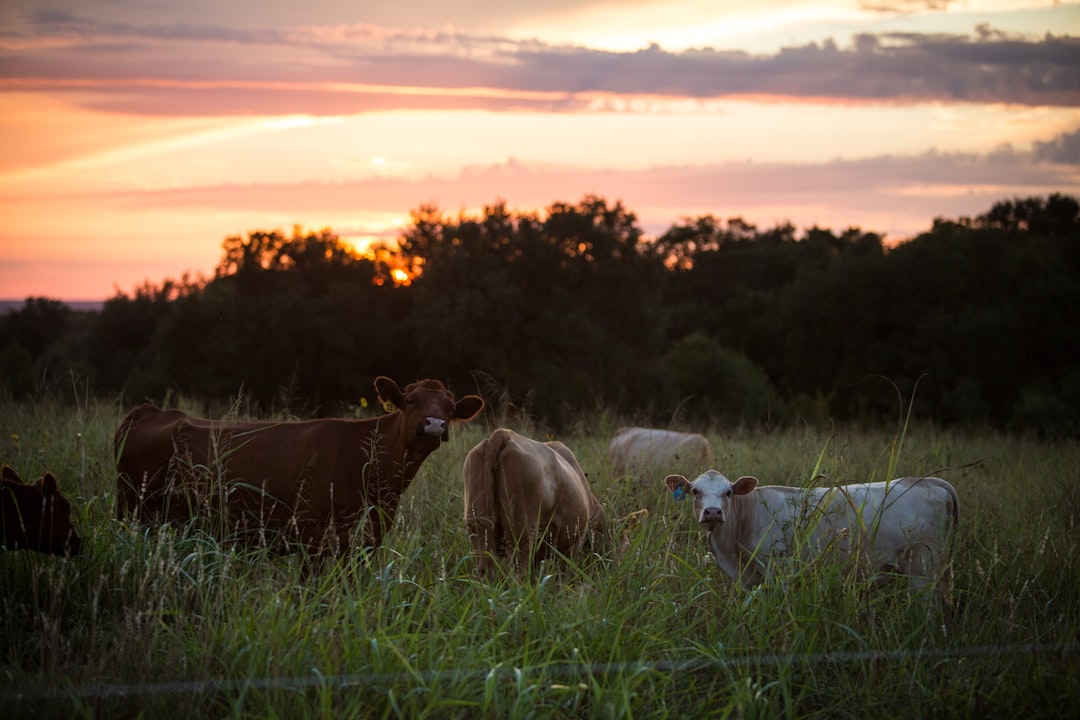
Walking through pastures during grass pollen season delivers exposure that no urban patient ever experiences. Tall grass releases pollen at body height, directly into the breathing zone. Patients who work pastures for several hours a day during summer have grass pollen exposure that is essentially impossible to avoid through environmental measures alone.
Treatment that fits the work
Avoidance is not realistic for outdoor workers. The cattle still need feeding, the fences still need mending, and the hay still needs handling. That is why immunotherapy is often the right answer for ranching families. Shots or drops train the immune system over 3 to 5 years to stop reacting to the allergens you cannot avoid. Once treatment finishes, the benefit usually persists for years to decades.
Why immunotherapy fits agricultural work
For patients whose work makes daily medication mandatory and who face decades of continuing exposure, the math on immunotherapy works out clearly. Three to five years of treatment versus indefinite daily medication, plus reduced asthma flares, plus the practical benefit of being able to do the work without symptoms. Most ranchers who commit to a course finish it.
Drops vs shots for outdoor workers
Drops fit better for patients whose schedules cannot reliably accommodate weekly office visits. Daily at-home dosing fits any work pattern. Success rates are 75 to 85 percent in our practice, slightly lower than the 85 to 90 percent for shots, but the convenience trade-off works for many outdoor workers.
Local healthcare ecosystem
Crawford patients access regional healthcare through Waco-area facilities and McGregor for closer urgent care.
Hospitals
Ascension Providence Waco and Baylor Scott & White Hillcrest are the two major hospital systems serving the metro. McGregor has a smaller medical facility for urgent care needs closer to home. We coordinate with all of these for severe asthma exacerbations or anaphylaxis admissions.
Local primary care
Family medicine practices in Crawford and McGregor refer to us for allergy evaluation. We send updated treatment plans back after each significant visit so the primary care record stays current.
Pharmacy access
Crawford and McGregor pharmacies handle standard medications. For specialty medications like biologics, we coordinate with specialty pharmacies that ship directly. Mail-order pharmacy is a practical option for stable maintenance medications.
Schools and exposure points
Crawford Independent School District serves the immediate community. Crawford schools have outdoor athletic facilities surrounded by ranchland, which produces exposure during peak grass and ragweed seasons.
Pediatric school coordination
For students with documented allergies, asthma, or anaphylaxis history, written allergy action plans on file with the school nurse and athletic trainer matter. We provide the documentation and update it annually. School coordination for severe pediatric cases is part of our regular workflow.
Pediatric care for ranching families
Children growing up on ranches have meaningful allergen exposure from an early age. Some develop allergies, some develop tolerance through early exposure (the hygiene hypothesis), and the patterns are individual. We test children of all ages when symptoms warrant it. Read more at our pediatric allergist page.
Common pediatric presentations
Recurring respiratory symptoms during summer pasture work. Eczema flares correlated with farm activities. Asthma triggered by hay handling. Insect sting reactions from bees and wasps common around livestock. Each of these warrants pediatric allergy evaluation when patterns are clear.
When the problem is not allergic at all
Some agricultural respiratory symptoms are not allergic. Organic dust toxic syndrome, hypersensitivity pneumonitis, and irritant-driven occupational asthma all look like allergy on the surface but require different treatment. We sort this out during the evaluation rather than assuming.
Differentiating allergic from non-allergic
Allergic symptoms involve histamine release: itching, sneezing, watery drainage, hives. Irritant symptoms involve direct mucosal damage: cough, irritation, sometimes fever-like response after heavy exposure. Skin testing and pulmonary function testing differentiate clearly. We work up patients comprehensively rather than assuming based on occupation.
Hypersensitivity pneumonitis
Farmer's lung is the classical example: heavy mold exposure produces a delayed immune response in the lungs that looks like asthma but requires different treatment. Persistent cough, fatigue, and weight loss in agricultural workers warrants pulmonologist evaluation alongside allergy workup.
Telehealth for distant patients
For established patients, virtual allergy care handles many follow-up visits, medication adjustments, and consultations. The 50-minute round-trip drive from Crawford for a 15-minute medication review is often unnecessary. Telehealth fits well into ranching schedules where flexibility around weather and animal needs matters.
When telehealth works
Medication adjustment after starting a new prescription. Review of test results from a recent visit. Symptom journal review. Refill management. Pre-procedure counseling. Each works well remotely.
When you need to come in
Initial new patient visits when physical exam matters. Skin testing. Allergy injections. Acute flares. Procedures like food challenges. About 80 percent of follow-up care can happen by telehealth for stable patients.
Patient flow vignettes
Real patient patterns from Crawford illustrate how care fits into agricultural life.
The cattle rancher on year-round drops
A Crawford rancher with multiple grass and mold sensitivities chose sublingual drops over weekly shots. Daily morning dosing fits into pre-dawn work routines. After 2 years, severe asthma flares dropped from monthly to twice yearly.
The hay producer with seasonal asthma
A hay producer with severe seasonal asthma started biologic therapy (Xolair) after standard inhalers were not enough. Monthly office injections plus daily controller inhaler produced significant improvement during peak hay season.
Cultural and lifestyle context
Crawford's identity as a working agricultural community shapes how patients approach allergy care.
Outdoor work culture
Many Crawford patients work outdoors regardless of allergy season. Avoidance is not realistic. Treatment that lets patients keep working is the practical goal, which usually means immunotherapy plus daily medication during peak exposure. Patients who try to manage with antihistamines alone often find symptoms worsen year after year as cumulative exposure drives sensitization higher.
Multi-generational ranching
Multi-generational ranching families often see allergy patterns develop or worsen across generations. The combination of cumulative exposure plus genetic predisposition means kids and grandkids sometimes develop allergies that previous generations did not have. We see family clusters in our practice spanning three generations.
Insect sting risk
Outdoor agricultural work brings higher exposure to bees, wasps, and fire ants. Severe sting reactions require workup, epinephrine prescription, and possibly venom immunotherapy. Read our coverage of insect sting allergy for more. Asp caterpillars on oak and elm trees during late summer add another sting risk worth knowing about.
Common presentations from Crawford
Patient histories from Crawford and the surrounding ranching country tend to cluster around recognizable patterns shaped by occupation and environment.
The cowboy with chronic sinusitis
Patients who have spent decades on horseback in pastures and feedlots commonly present with chronic sinus disease that has progressed despite multiple antibiotic courses. Treatment usually involves addressing both the underlying allergic component and existing sinusitis through coordinated allergy and ENT care.
The farmer with combined exposures
Workers handling hay, grain, and livestock have combined exposure to mold, grass pollen, dust, and animal dander. Comprehensive testing identifies the specific drivers, and treatment typically addresses multiple allergens simultaneously through immunotherapy.
The pediatric patient growing up on a ranch
Children raised on ranches sometimes develop allergies during adolescence after years of seemingly tolerating exposure. The pattern reflects the cumulative nature of allergic sensitization. We test pediatric patients when symptoms warrant it, and immunotherapy started in late childhood produces the longest-lasting benefit. The hygiene hypothesis suggests early farm exposure may be protective for some kids, but it does not protect all. Treating those who develop sensitivities matters as much as preventing them, and the right approach depends on which specific allergens drive their disease.
Continuity matters
Allergy treatment, especially immunotherapy, takes 3 to 5 years for full effect. Our staff tenure runs 12 to 20 plus years, which means the nurse drawing your shot today is probably the same nurse who will draw it next year. That continuity catches subtle changes that a rotating staff would miss, particularly important for outdoor workers whose exposure patterns shift with weather and seasonal work demands.
Insurance and scheduling
We accept most major insurance plans and bill straightforwardly. New patient visits are typically scheduled within 1 to 3 weeks. Telehealth follow-ups are available for established patients, which saves the drive when only a medication adjustment is needed. TRICARE and rural health plans common in agricultural communities are also accepted. Self-pay options with payment plans are available for patients without insurance.
When to schedule
If outdoor work consistently produces respiratory symptoms, if asthma is hard to control during hay or pasture work, if you have any insect sting reaction history, or if symptoms have not responded to OTC medication, schedule an evaluation. Start at our new patients page.