


Mesquite is one of those allergens that does not get talked about much in Central Texas allergy advice, partly because it pollinates during a stretch when oak and grass dominate the conversation. But for the patients sensitized to it, mesquite season produces classic spring allergy misery from late April into June every year. The trees are everywhere west of I-35, and the pollen drifts widely across the metro. Recognizing mesquite as the driver instead of generic spring allergy unlocks targeted treatment options that work better for patients with this specific sensitization.
Key takeaways
- Mesquite pollinates late April through June in Central Texas
- Trees are widespread on rangeland, in the Hill Country, and along fencerows
- Symptoms overlap with oak and grass season, which can mask the specific cause
- Skin testing identifies mesquite specifically; treatment includes medication and immunotherapy
- Mesquite is in the legume family with possible cross-reactivity to other legumes
What mesquite is and where it grows
Honey mesquite (Prosopis glandulosa) is the most common species in Central Texas. It is a small, hardy, drought-tolerant tree with narrow leaves and long thorns. Mesquite grows on rangeland, along fencerows, in pastures, and increasingly in suburban yards as homeowners value drought-tolerant landscaping.
Geographic distribution in Central Texas
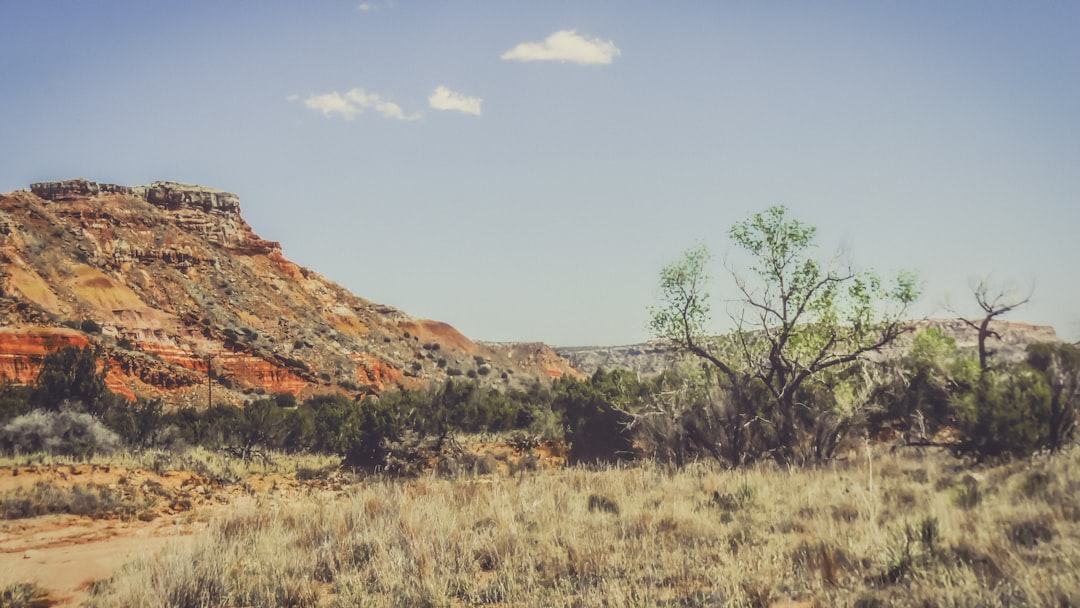
Western McLennan County, the Hill Country, and most of the western half of the state are all mesquite country. Pollen counts can be high in the western parts of Waco when the wind comes from the west. Patients in west Waco and Crawford tend to have higher mesquite exposure than patients in central or east Waco.
Historical spread across Texas
Mesquite has expanded its range significantly over the past century. Fire suppression, changing rangeland management, and overgrazing all let mesquite colonize areas where it was previously controlled by natural fire cycles. The trend means mesquite exposure for Central Texas patients is generally increasing year over year, particularly in suburban areas where mesquite is now common ornamental landscaping. Patients moving from other regions often pick up new mesquite sensitization after a few seasons of exposure.
Season and pollen patterns
Mesquite blooms after the spring oak peak winds down. Late April through June is the typical window, with year-to-year variation depending on rainfall and temperature. Drier years tend to produce more concentrated pollen releases over shorter windows. The flowers are catkin-like clusters that release substantial pollen on warm dry days.
Daily count tracking
Our daily pollen count tracks mesquite alongside oak, grass, and other major pollens during the relevant season. Patients commonly notice their worst weeks correlate to specific count thresholds, which helps them anticipate symptom flares and adjust medication timing.
Wind and weather effects
Mesquite pollen release is highly weather-dependent. Hot dry windy days produce the highest atmospheric counts. Rain temporarily clears the air. Cold fronts can produce sudden spikes as wind shifts disturb settled pollen. Patients with significant mesquite sensitivity learn to anticipate these patterns within a season or two.
Occupational exposure considerations
Patients whose work puts them outdoors during mesquite season face exposure that no environmental measure can fully address. Recognition matters because the right treatment changes when avoidance is not realistic.
Ranchers and agricultural workers
Mesquite is dense across Texas rangeland, and ranchers spend hours per day surrounded by trees during peak pollen weeks. Walking through pastures during morning pollen release delivers concentrated exposure that urban patients never experience. Many ranchers test positive to mesquite plus multiple grass species after years of cumulative exposure.
Landscapers and tree-care crews
Workers who prune, remove, or plant mesquite face acute high-dose exposure. Pruning during bloom releases pollen at body height, directly into the breathing zone. Wearing N95 masks during this work substantially reduces exposure. For workers with significant sensitivity, scheduling intensive mesquite work outside of peak bloom is the practical answer.
Construction and surveying
New construction in west Waco and the Hill Country edge frequently disturbs mature mesquite stands. The dust raised during clearing, plus pollen released by stressed trees, produces high-concentration exposure for site workers. Hard-hat masks with filtration are standard PPE for some crews.
Symptoms and overlap with other allergens
Mesquite-driven symptoms look like other pollen allergies: nasal congestion, sneezing, itchy watery eyes, post-nasal drip, and sometimes fatigue and asthma flares. The diagnostic challenge is that mesquite season overlaps with the tail of oak season and the start of grass season, so patients with multiple sensitivities cannot easily tell what is driving symptoms on a given day.
Why patients miss the mesquite contribution
Most patients are aware of cedar fever in winter and oak in early spring. Mesquite arrives just as oak is finishing, so the tail of "spring allergies" is often actually the start of mesquite season. Without specific testing, patients often attribute the late-spring stretch to lingering oak rather than the new mesquite exposure.
Asthma triggers
For patients with allergic asthma, mesquite pollen can drive flares similar to other tree pollens. Pre-treatment with controller medications and pre-exercise albuterol becomes important during the season. Read more on managing pollen-triggered asthma in our coverage of asthma attacks in Waco.
Cross-reactivity in detail
Mesquite is a legume, in the Fabaceae family, which means it shares some protein structures with other legumes. Cross-reactivity patterns are individual and worth understanding.
Legume cross-reactivity
Some patients with strong mesquite sensitization have reactions to peanut, soybean, beans, or peas. Most do not. The cross-reactivity is real but not universal. If you have severe mesquite allergy and unexplained reactions to legumes, mention it during your visit. We can test relevant foods if the history suggests it.
Other tree pollen cross-reactions
Cross-reactivity between mesquite and other tree pollens is generally limited because mesquite is in a different botanical family from oak, cedar, and most other Central Texas trees. Patients allergic to multiple trees usually have separate sensitizations to each, not cross-reactive sensitization driven by one species.
Pollen food syndrome
Pollen food syndrome from mesquite is uncommon but documented. Some patients report mouth itching with raw legumes during peak mesquite season, which resolves after the season ends. Read more about the broader pattern at pollen food syndrome.
How mesquite allergy is diagnosed
Skin testing or specific IgE blood testing identifies mesquite-specific sensitization. We include mesquite on our standard Central Texas pollen panel because of how prevalent it is in our patient population. Results come back during the visit when skin testing is used.
Skin prick testing in detail
A nurse places a small drop of mesquite extract on your back or forearm and pricks the skin underneath. After 15 to 20 minutes, we measure any wheal that develops. Wheal size is graded by millimeters and tells us how strongly you are sensitized. Larger wheals correlate with more severe clinical symptoms in most patients. Read more about our allergy testing process.
When blood testing is preferred
For patients on antihistamines who cannot stop them for skin testing, or for patients with severe eczema covering the test sites, specific IgE blood testing for mesquite is an alternative. Results take 2 to 5 days from the lab. The information is comparable to skin testing for most clinical decisions.
Treatment options
For mild to moderate symptoms, daily nasal steroid spray and antihistamines (cetirizine, fexofenadine, loratadine) work for most patients. Saline rinses help during peak weeks. For moderate to severe symptoms or for patients who do not want to live on daily medications, immunotherapy is the long-term answer.
Medication during mesquite season
Start daily nasal steroid spray 2 to 4 weeks before your typical mesquite season begins. Add daily non-sedating antihistamine when symptoms appear. Antihistamine eye drops (olopatadine, ketotifen) help ocular symptoms. Saline rinses morning and evening during peak weeks. This regimen controls symptoms for most patients without escalation.
When immunotherapy is the right call
Allergy shots succeed in 85 to 90 percent of patients in our 45 plus year experience, sublingual drops in 75 to 85 percent. The 3 to 5 year course retrains the immune system, and benefit usually persists for many years afterward. Patients with strong mesquite sensitivity who want to be off daily medications during late spring are good candidates. Take the immunotherapy candidacy quiz for a quick screen.

Evolving research and treatments
Allergen immunotherapy formulations have improved significantly over the past two decades, with implications for mesquite-allergic patients.
Standardized extracts
Older immunotherapy used non-standardized extracts with variable potency. Modern mesquite extracts are more consistent in protein content, which makes treatment dosing more predictable. The improved standardization has contributed to higher success rates over time.
Sublingual tablets
FDA-approved sublingual tablets exist for some allergens (grass, ragweed, dust mite) but not yet for mesquite specifically. Custom-mixed sublingual drops remain the at-home option for mesquite-allergic patients who prefer drops over shots. Coverage and pricing are plan-specific.
Climate and pollen research
Climate research suggests Central Texas pollen seasons are shifting earlier and lasting longer than they did decades ago. For mesquite specifically, the implications include earlier season starts and potentially higher peak counts during dry stretches. Patients may need to shift their pre-season medication start dates earlier than the calendar previously suggested.
Cultural and lifestyle context
Texas culture intersects with mesquite in ways that affect exposure patterns.
Mesquite cooking and grilling
Mesquite wood for grilling and smoking is a Texas tradition. Patients with mesquite pollen allergy occasionally ask whether using mesquite wood for cooking poses a problem. The answer is generally no: cooked mesquite wood smoke does not contain the proteins that drive pollen allergy. The flavor is fine for allergic patients in most cases.
Outdoor lifestyle and mesquite season
Late spring is peak outdoor season in Texas: graduations, cookouts, ranch work, soccer playoffs. Mesquite season hits exactly when families spend the most time outdoors. Patients can plan around the worst weeks by tracking pollen counts and pre-treating before peaks.
Newcomers to Texas
Patients moving to Central Texas from other regions often develop new mesquite sensitization within 1 to 3 years. The pattern is consistent enough that we routinely test newcomers presenting with seasonal symptoms even when they had no allergy history before moving. Read about our regional service area at Central Texas allergy care.
Practical exposure reduction during peak weeks
Keep windows closed and run AC during mesquite peak. Shower after extended outdoor time to remove pollen from skin and hair. Plan outdoor activities for early morning or after rain when counts are lower. Use HEPA filtration in the bedroom. Avoid mowing during peak mesquite weeks if possible, or wear a dust mask if you must mow.
Other Central Texas pollens to watch for
Mesquite is one of several major Central Texas pollens. Mountain cedar peaks December through February (covered in our cedar allergy article). Oak peaks March through May (oak pollen guide). Grasses run May through October. Ragweed peaks September and October (ragweed coverage). Patients commonly have multiple sensitivities, which is why testing identifies which specific allergens drive your symptoms.
When to schedule an evaluation
If late-spring allergies have gotten worse over time, if symptoms persist into June after oak season ends, or if generic OTC medication is not enough, an evaluation that includes mesquite testing makes sense. Our office is centrally located in Waco. New patient visits are typically within 1 to 3 weeks. Schedule through our new patients page.